

Welcome to our November 2026 Viewpoints, a monthly bulletin from PDS Planning to our valued clients and friends. Our goal with each issue of Viewpoints is to provide you with a wide variety of perspectives on life and wealth. Feel free to share with others.
The Nvidia Saga Continues
On November 8th, Jensen Huang, CEO of Nvidia, admitted to having an affair with a possible Chinese spy and an investigation was opened to determined if he shared secrets with her. On November 12th, Huang resigned as CEO. On November 17th during the company earnings call, the board of directors stated they weren’t considering reinstating Huang as CEO despite many employees, investors, and others calling for him to come back. On November 23rd, the board voted unanimously to reinstate Jensen Huang as the CEO of Nvidia after input from senior levels of the government – later confirmed to be President Trump.
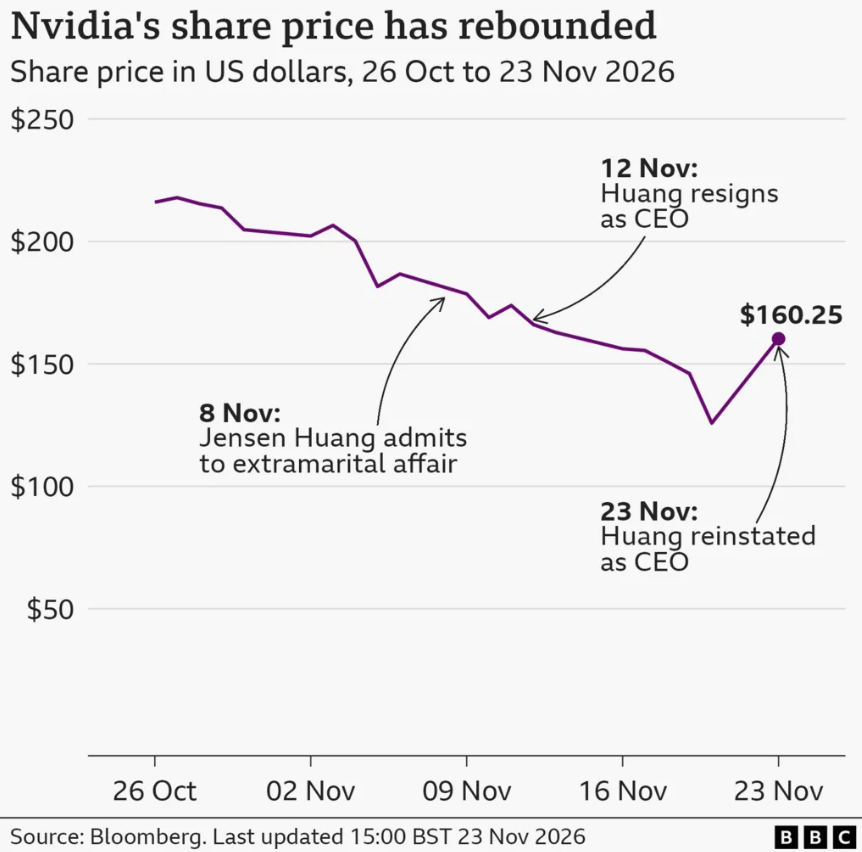
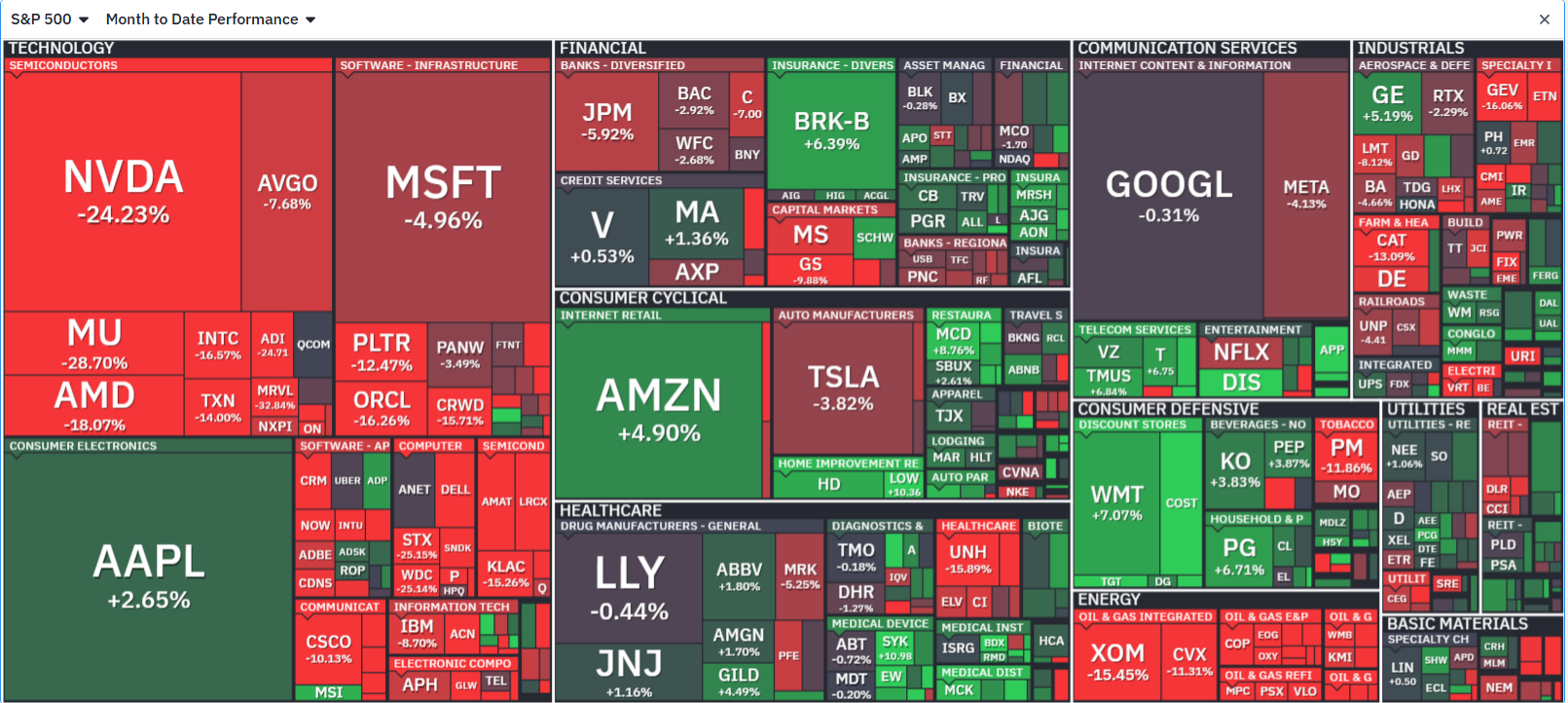
The stock price has fluctuated wildly over the last couple weeks. In November, there have been daily moves of: -9.26%, -4.27%, -5.47%, -4.34%, +11.69%, -14.01%, +31.48%, -5.78%, resulting in a monthly fall of -28.56%. After being reinstated, Huang reportedly disclosed additional affairs beyond the two that have already been reported to the board, and investigations are still ongoing internally. What this all means for the broader AI market and stock market in general remains to be seen. Below is a map of the S&P 500 showing month-to-date performance of all 500 constituents, categorized by sector. Technology (left) and energy (bottom right), two of the sectors most closely tied to AI, have performed the worst.
Corrections and Recoveries
Market declines are never pleasant, but they aren’t unusual, especially for technology stocks. The Nasdaq has seen several swings like this in the past year alone. From early June to the end of July, it fell nearly 10% on many of the same AI concerns, before rebounding 13% to a new all-time high in early October.
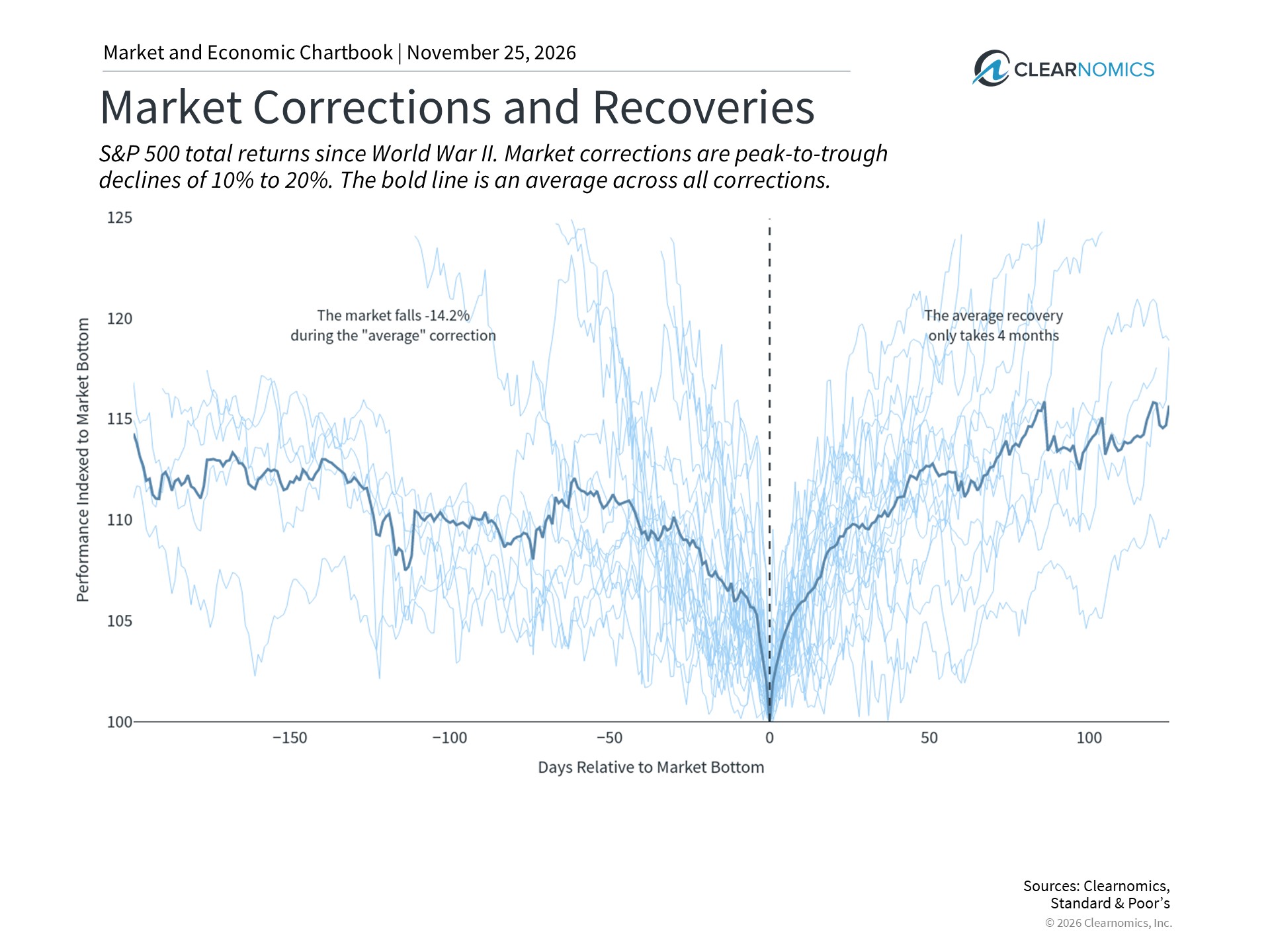
Taking a longer view, the S&P 500 has fallen an average of 14% during corrections since World War II and has recovered in roughly four months. The dark blue line in the above chart follows this average path. That said, no two corrections are the same, and history is no guarantee that markets will always bounce back quickly. What history does show is the depth and length of a decline tends to depend on the underlying cause, and when corporate profits and economic growth are healthy, as they have been in recent years, pullbacks have often been shorter.
Importance of Staying Invested
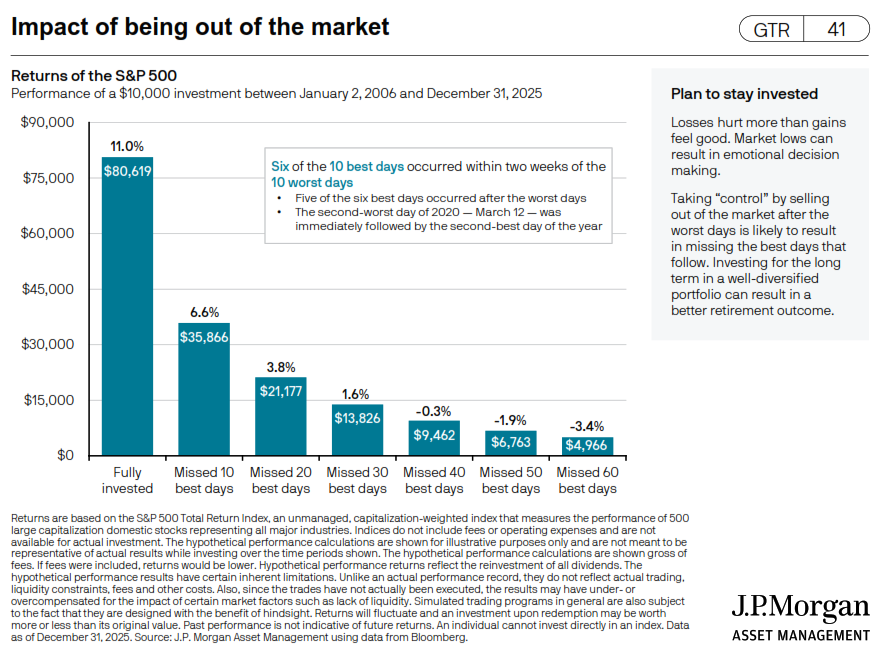
During strong bull markets, many investors wish they had been able to buy at lower prices. Yet when those lower prices actually arrive, the uncertainty and fear that come with them can make it difficult to act. That reaction lines up with a core principle of behavioral economics called loss aversion, where the pain of a loss feels about twice as strong as the pleasure of an equal gain. The emotional pull of a correction can be strong, but staying invested through the uncertainty has historically made a meaningful difference, and the chart below highlights this in a few ways.
- The best days in the market have tended to follow closely on the heels of the worst days
- Six of the 10 best days happened within two weeks of the 10 worst days
- Five of those six best days came after the worst days
- MISSING the 10 best days cut the ending value of a $10,000 investment by more than half, from roughly $80,600 to roughly $35,900
Happy Thanksgiving Everyone!
IMPORTANT DISCLOSURE INFORMATION: Please remember that past performance is no guarantee of future results. Different types of investments involve varying degrees of risk, and there can be no assurance that the future performance of any specific investment, investment strategy, or product (including the investments and/or investment strategies recommended or undertaken by PDS Planning, Inc. [“PDS”]), or any non-investment related content, made reference to directly or indirectly in this blog will be profitable, equal any corresponding indicated historical performance level(s), be suitable for your portfolio or individual situation, or prove successful. Due to various factors, including changing market conditions and/or applicable laws, the content may no longer be reflective of current opinions or positions. Moreover, you should not assume that any discussion or information contained in this blog serves as the receipt of, or as a substitute for, personalized investment advice from PDS. To the extent that a reader has any questions regarding the applicability of any specific issue discussed above to his/her individual situation, he/she is encouraged to consult with the professional advisor of his/her choosing. PDS is neither a law firm nor a certified public accounting firm and no portion of the blog content should be construed as legal or accounting advice. A copy of the PDS’ current written disclosure Brochure discussing our advisory services and fees is available for review upon request or at www.pdsplanning.com. Please Note: PDS does not make any representations or warranties as to the accuracy, timeliness, suitability, completeness, or relevance of any information prepared by any unaffiliated third party, whether linked to PDS’ web site or blog or incorporated herein, and takes no responsibility for any such content. All such information is provided solely for convenience purposes only and all users thereof should be guided accordingly. Please Remember: If you are a PDS client, please contact PDS, in writing, if there are any changes in your personal/financial situation or investment objectives for the purpose of reviewing/evaluating/revising our previous recommendations and/or services, or if you would like to impose, add, or to modify any reasonable restrictions to our investment advisory services. Unless, and until, you notify us, in writing, to the contrary, we shall continue to provide services as we do currently. Please Also Remember to advise us if you have not been receiving account statements (at least quarterly) from the account custodian.