

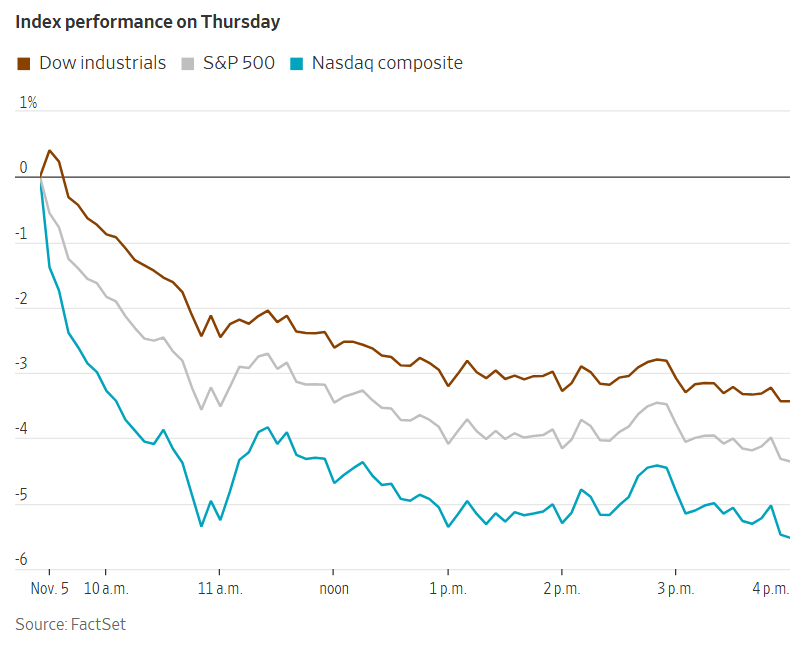
The whirlwind that was the US midterm elections has all but wrapped up, and it ended up being a decisive win for Democrats across the Senate, the House, and governorships around the country. Markets reacted with strong positivity on Wednesday, welcoming the clearer picture and the drop in uncertainty that came with it. A quick and sharp reversal followed on Thursday, with investors seemingly electing to take some gains in their AI investments before the likelihood of more regulation around data center buildouts has a chance to sink in.
Thursday has shown one way in which this election can impact markets over the next couple years. How else might global markets be potentially impacted?
- Iran: The war or conflict in Iran could more quickly come to an end. This ended up being a big sticking point for many voters as it has caused gas prices to remain elevated and inflation to continue being a problem. There’s still some gridlock between Congress and the president, but but there may be pressure on both parties to bring the conflict to an end and ease prices, according to insights from JPMorgan Global Market Strategists.
- Tariffs: Tariffs have been a headwind, especially for international markets. As the political powers begin to shift, tariffs may end up being a point both parties can begin to meet on with the goal of affordability. Asia has taken the brunt of tariff consequences and should they lighten, their markets may benefit. Europe could benefit as well, although lower energy prices from the point above may matter more there.
- Data Centers: We saw firsthand on Thursday what potential regulation around data centers could mean for markets. The Nasdaq index fell more than 5.50% and the Magnificent 7 companies alone lost $1 trillion in combined market cap. Thursday’s precipitous move down doesn’t necessarily signal a lasting shift; prices are adjusting to the possibility of regulations imposed around the data center expansion. While the impact on US markets may be muted or negative, returns may be better in parts of emerging markets, like China, where there’s less political pushback.
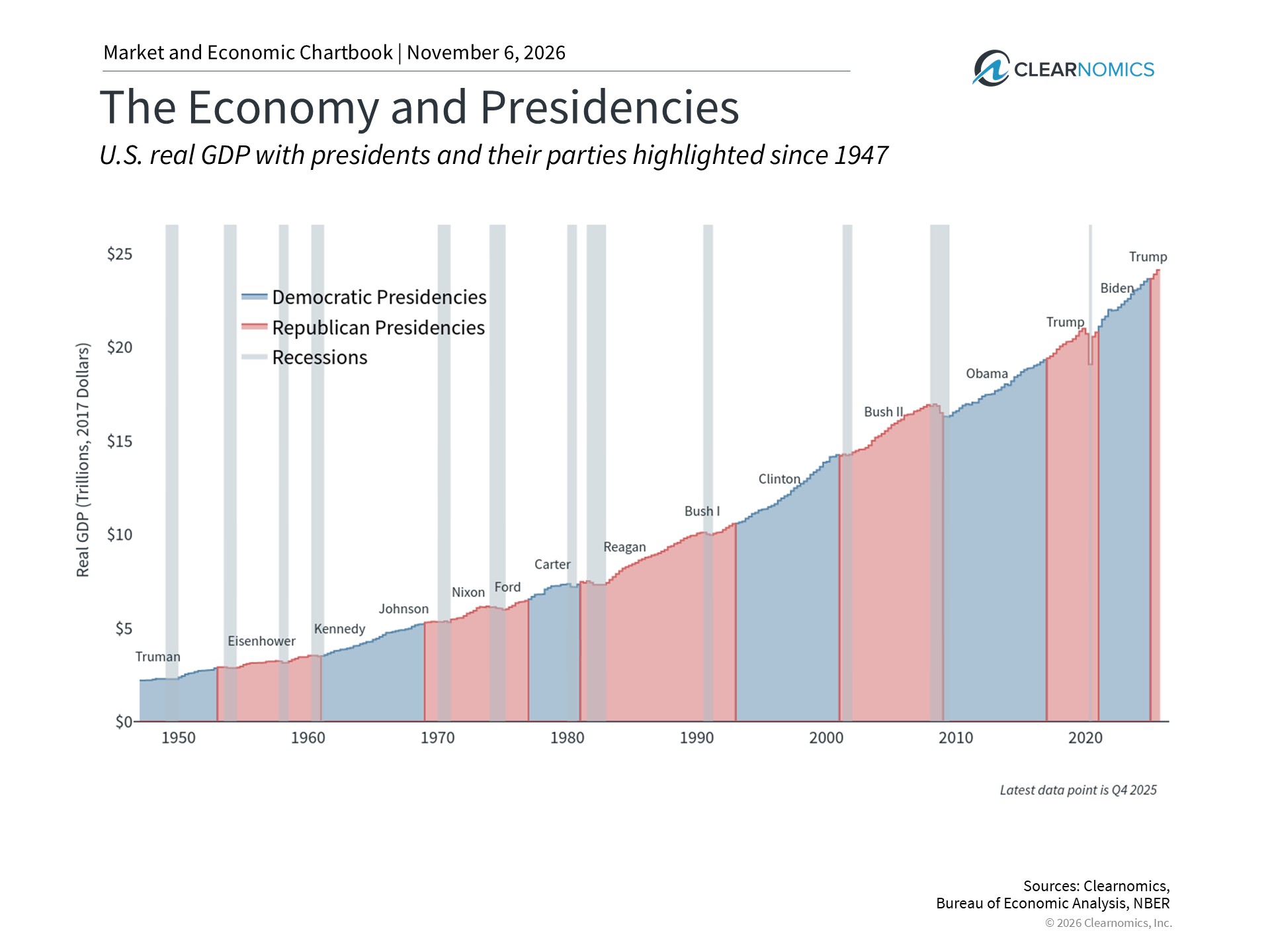
The implications seem be far reaching, and the short-term reaction is hard to ignore. But I think it’s important to remember that while elections matter greatly as citizens, they have historically mattered far less to long-term portfolios than investors expect. Michael Cembalest, Chairman of Market and Investment Strategy at JPMorgan says, “Midterms are rarely market-moving events. The business cycle drives markets, and the important components are things that midterms do not affect: 10 yr interest rates, commodity prices, Fed policy, corporate profits, budget deficits, defense spending, the pace of AI investment over the next 12 months, the ferocious borrowing needs of AI companies and the impact on credit spreads, etc.”
At PDS, we will continue to monitor markets to take advantage of any volatility in the short term by way of rebalancing and tax loss harvesting, while reminding clients the importance of remaining invested and staying confident in the long-term financial plan. As we so often say, today’s headlines and tomorrow’s reality are seldom the same.
IMPORTANT DISCLOSURE INFORMATION: Please remember that past performance is no guarantee of future results. Different types of investments involve varying degrees of risk, and there can be no assurance that the future performance of any specific investment, investment strategy, or product (including the investments and/or investment strategies recommended or undertaken by PDS Planning, Inc. [“PDS”]), or any non-investment related content, made reference to directly or indirectly in this blog will be profitable, equal any corresponding indicated historical performance level(s), be suitable for your portfolio or individual situation, or prove successful. Due to various factors, including changing market conditions and/or applicable laws, the content may no longer be reflective of current opinions or positions. Moreover, you should not assume that any discussion or information contained in this blog serves as the receipt of, or as a substitute for, personalized investment advice from PDS. To the extent that a reader has any questions regarding the applicability of any specific issue discussed above to his/her individual situation, he/she is encouraged to consult with the professional advisor of his/her choosing. PDS is neither a law firm nor a certified public accounting firm and no portion of the blog content should be construed as legal or accounting advice. A copy of the PDS’ current written disclosure Brochure discussing our advisory services and fees is available for review upon request or at www.pdsplanning.com. Please Note: PDS does not make any representations or warranties as to the accuracy, timeliness, suitability, completeness, or relevance of any information prepared by any unaffiliated third party, whether linked to PDS’ web site or blog or incorporated herein, and takes no responsibility for any such content. All such information is provided solely for convenience purposes only and all users thereof should be guided accordingly. Please Remember: If you are a PDS client, please contact PDS, in writing, if there are any changes in your personal/financial situation or investment objectives for the purpose of reviewing/evaluating/revising our previous recommendations and/or services, or if you would like to impose, add, or to modify any reasonable restrictions to our investment advisory services. Unless, and until, you notify us, in writing, to the contrary, we shall continue to provide services as we do currently. Please Also Remember to advise us if you have not been receiving account statements (at least quarterly) from the account custodian.