
Podcast Transcript Summary
Financial planning is often thought of in terms of numbers—portfolios, returns, and projections—but in reality, it’s much more personal than that. Behind every decision is a story, a goal, or a moment in life that requires clarity and confidence.
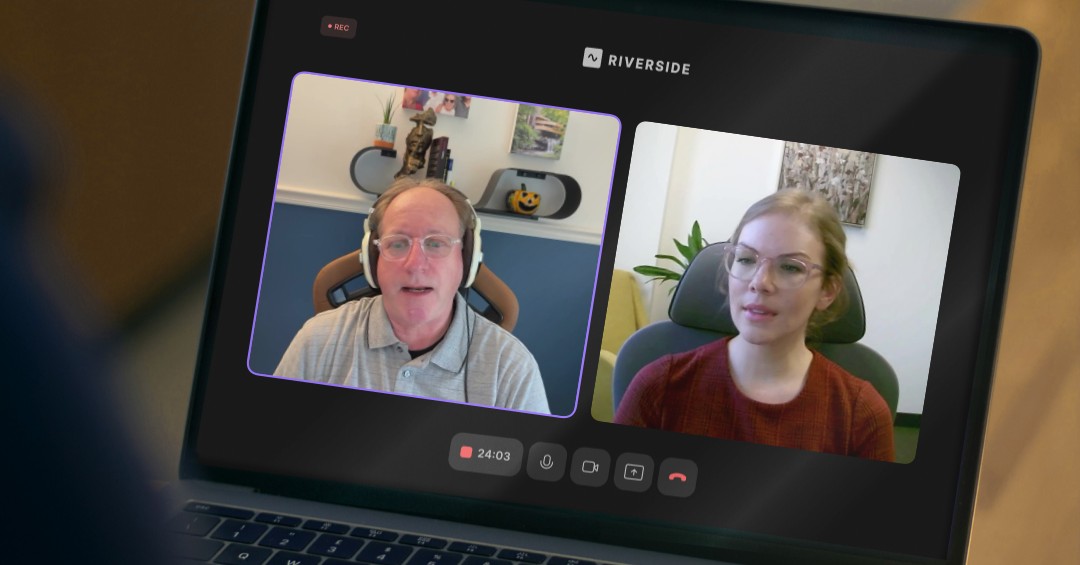
In this episode of From Planning to Prosperity, we sit down with Beth McCampbell, FPQP™ of PDS Planning to explore what financial planning really looks like behind the scenes. From her unconventional path into the industry to her day-to-day work with clients, Beth shares insight into how relationships, thoughtful guidance, and evolving technology all play a role in helping individuals navigate complex financial decisions.
This conversation offers a closer look at the human side of wealth management; where trust, communication, and understanding matter just as much as the numbers themselves.
Introduction
Stephen Palmer:
Hello and welcome to From Planning to Prosperity, the podcast where we spotlight wealth management professionals who are shaping the future of financial advice and client service.
I’m your host, Stephen Palmer, and today we’re excited to feature Beth McCampbell from PDS Planning.
Before we dive in, let’s start with a little background. Beth, what first drew you into the wealth management space?
Beth’s Career Journey
Beth McCampbell:
I have an interesting story about how I got started. I was previously in floral design and actually began at PDS Planning as a receptionist. So it wasn’t necessarily wealth management that drew me in—it was more about finding a steady job since I had been working a lot of evenings and weekends.
What has kept me here, though, is the relationships. The relationships with clients and coworkers are really what I enjoy most about financial planning.
A Day in the Life of a Financial Advisor
Stephen Palmer:
That’s great. For those who may not know, what does your day-to-day look like?
Beth McCampbell:
My day-to-day can look very different depending on the clients I’m working with. Some days I’m helping someone evaluate a job offer, while other days I might be working through a severance package, retirement planning, or saving for a child’s education.
A lot of my time is spent on email communication, along with phone calls and client meetings. We try to meet clients in-person when possible, but we also use Zoom and Teams—especially since we have clients across the country. In fact, there are some clients I’ve never met in person.
Ultimately, my schedule is driven by what my clients need on any given day.
Industry Evolution: Technology & AI
Stephen Palmer:
The industry is evolving quickly. What changes are you seeing, especially with technology and AI?
Beth McCampbell:
A lot has changed—even in just the last five to ten years. Technology plays a huge role in financial planning today. We use software daily to build financial plans and help guide client decisions.
With AI, one of the biggest changes we’ve adopted is automated note-taking. It allows us to stay fully engaged in conversations instead of focusing on writing everything down. After the meeting, we get a structured summary we can use for follow-ups and action items.
That said, while technology is advancing, relationships still matter most. Every financial decision has an emotional component, and that’s something AI can’t fully replace.
The Human Side of Financial Planning
Beth McCampbell:
At the end of the day, people are emotional about money. That’s why relationships are so important in what we do. Not every client is the same and financial planning isn’t one-size-fits-all.
Client Success Stories
Stephen Palmer:
Do you have any success stories that stand out?
Beth McCampbell:
It’s hard to pick just one because helping clients reach their goals is what we do every day. But one recent example stands out.
I have a client in their early 50s who retired at the beginning of the year—very early by most standards. At the same time, they just went under contract to build their dream home.
That’s a big financial decision, especially without a steady income. But they have confidence because we built a plan, ran projections, and stress-tested everything. They know it works.
On a personal level, my own journey is also a success story. I started as a receptionist, and now, ten years later, I’m a lead advisor working with high-net-worth clients, studying for my CFP, and raising a young family.
Challenges in Wealth Management
Stephen Palmer:
What challenges are you facing right now?
Beth McCampbell:
Technology is both a benefit and a challenge. We use multiple systems—portfolio management, financial planning, CRM—and they don’t always integrate perfectly. That can lead to inefficiencies and duplicated work.
Another challenge is execution. We can create a great financial plan, but clients still have to take action. And with how busy life is, that’s not always easy.
That’s why we focus on meeting clients where they are. For some people, small, manageable steps are much more effective than overwhelming them with a long to-do list.
Growth Strategy & Business Model
Stephen Palmer:
What are you focusing on as you grow your business?
Beth McCampbell:
At PDS Planning, we operate on a flat fee model, so growing assets under management isn’t our primary focus.
We’re celebrating 40 years in business this year, and over the past decade, we’ve transitioned more fully to a flat fee structure. That’s a key differentiator for us.
For example, if someone has $2 million invested and pays a 1% fee elsewhere, that’s $20,000 annually—and it increases as their portfolio grows. With our model, clients know exactly what they’re paying, and it doesn’t fluctuate with market performance.
We continue to focus on client acquisition and growth, but our transparency around fees is a major driver.
Looking Ahead
Stephen Palmer:
Where do you see your firm heading in the next 6–12 months?
Beth McCampbell:
A balance of growth and strengthening relationships. We’re expanding our team, evaluating office space, and continuing to refine our processes.
Personally, I’m focused on completing my CFP certification. Several others in our office are working toward that as well, so there’s a strong emphasis on internal growth and education.
Operational Focus
Stephen Palmer:
If you could solve one major challenge right now, what would it be?
Beth McCampbell:
Improving operational processes. As we grow, it’s critical to have clear, consistent systems in place so new team members can easily learn and integrate.
Better processes mean better efficiency—and ultimately a better client experience.
Closing Thoughts
Stephen Palmer:
This has been a truly valuable conversation. Thank you for sharing your journey and insights.
Beth McCampbell:
Thank you so much for having me.
Stephen Palmer:
And that’s a wrap on From Planning to Prosperity. Tune in next time—we’ll see you soon.
IMPORTANT DISCLOSURE INFORMATION: Please remember that past performance is no guarantee of future results. Different types of investments involve varying degrees of risk, and there can be no assurance that the future performance of any specific investment, investment strategy, or product (including the investments and/or investment strategies recommended or undertaken by PDS Planning, Inc. [“PDS”]), or any non-investment related content, made reference to directly or indirectly in this blog will be profitable, equal any corresponding indicated historical performance level(s), be suitable for your portfolio or individual situation, or prove successful. Due to various factors, including changing market conditions and/or applicable laws, the content may no longer be reflective of current opinions or positions. Moreover, you should not assume that any discussion or information contained in this blog serves as the receipt of, or as a substitute for, personalized investment advice from PDS. To the extent that a reader has any questions regarding the applicability of any specific issue discussed above to his/her individual situation, he/she is encouraged to consult with the professional advisor of his/her choosing. PDS is neither a law firm nor a certified public accounting firm and no portion of the blog content should be construed as legal or accounting advice. A copy of the PDS’ current written disclosure Brochure discussing our advisory services and fees is available for review upon request or at www.pdsplanning.com. Please Note: PDS does not make any representations or warranties as to the accuracy, timeliness, suitability, completeness, or relevance of any information prepared by any unaffiliated third party, whether linked to PDS’ web site or blog or incorporated herein, and takes no responsibility for any such content. All such information is provided solely for convenience purposes only and all users thereof should be guided accordingly. Please Remember: If you are a PDS client, please contact PDS, in writing, if there are any changes in your personal/financial situation or investment objectives for the purpose of reviewing/evaluating/revising our previous recommendations and/or services, or if you would like to impose, add, or to modify any reasonable restrictions to our investment advisory services. Unless, and until, you notify us, in writing, to the contrary, we shall continue to provide services as we do currently. Please Also Remember to advise us if you have not been receiving account statements (at least quarterly) from the account custodian.